
Do We Need to Develop Underground Silos?
As Russia war on Ukraine has entered its twelfth year, it may be time for Europe to learn from Ukrainian experience on food security.

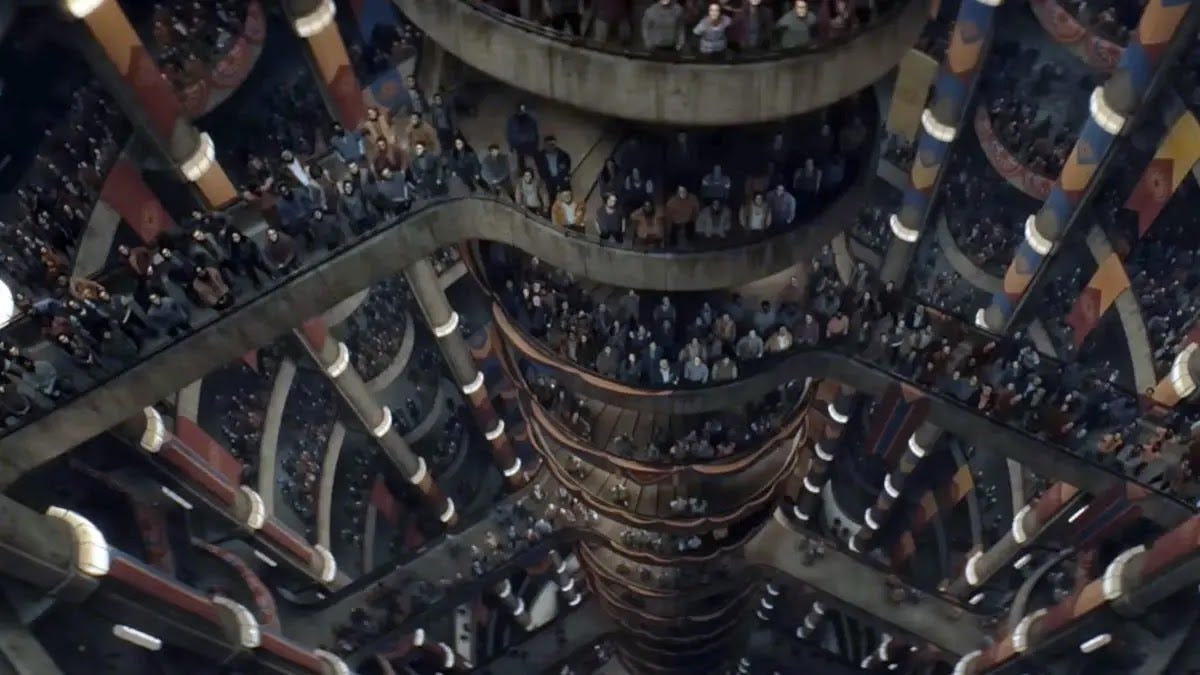
Two of the most critical resources in a crisis are food and water. The latter is usually a question of logistics, potable water is an available resource in most locales, but getting it where it is needed in a crisis can be a challenge.
Still, again in most cases and most crises, there is no need for large-scale dedicated water storage. Food is a different story. Unless a country or region has taken special measures food reserves will typically run out in a couple weeks without outside supplies, and many crises and conflicts last much longer.
In the world today there are several conflicts where the population is nearing famine.
Global Hunger Games: When we took a wrong turn

In 2014, in the run-up to the Sustainable Development Goals (SDG), following the relative success of the Millennium Development Goals, set in the year 2000, things looked good. Of course the targets were ambitious, and a majority were not achieved, but looking at the actual results, hard not to be joyful.
This is not just an issue in the poorer countries in the world, richer countries can also be at risk if facing a malevolent adversary. In Ukraine Russia has attacked grain silos and crops, though as Ukraine is a major food exporter the impact has been more economic than nutritional. Other countries are more vulnerable. Sweden and Norway are rebuilding their food stockpiles (Finland never ended theirs), with the goal that the country should have a sufficient stockpile for three months.
There’s been a low-key discussion in Norway whether such stockpiles should be kept underground, as in this article from professor Eivind Grøv, SINTEF:
Hide the Grain Underground
The grain silos we know as landmarks are easy to find—and easy to target. In a world characterized by geopolitical unrest, extreme weather, and increasing security threats, it is risky to base our emergency preparedness on visible surface storage.
Underground rock caverns provide:
Better protection against sabotage, acts of war, and natural disasters
Space savings in urban areas
Stable temperatures that provide optimal storage conditions
The full article is found in Norwegian above, but here is a condensed version:
Foodstuffs, including grain, can be stored in dedicated rock caverns that must be tailor-made for the purpose. The design must take into account loading and unloading, ventilation, and drying. It is not a given that the silo shape used for above-ground grain silos is the right and only approach; we must involve experts on the storage of the products in question. We can shape the rock cavern itself as we want.
We possess a great deal of knowledge about what is important when building rock caverns for various purposes. We have expertise in refrigerated storage, building large rock caverns, ventilating such rooms, and the psychosocial aspects of working underground.
What remains is to piece the puzzle together for the specific purpose of storing vital grain for the population, as well as identifying the correct location with regard to physical security.
The Rock Holds the Cold
We have used cold storage in rock caverns for food storage in many places in Norway. One of the first was Jotun Is’s cold storage facility from the 1960s. Right next to the factory, a rock cavern was built where finished ice cream products were stored.
In the Faroe Islands, a fish storage facility has been established in rock caverns where fish is stored in a frozen state. This is interesting because rock has a fantastic capacity to retain cold once the food is initially frozen down to a given temperature.
In Malta, I visited a storage facility for vegetables where they utilized large rooms in natural rock formations (karst). They sealed them off, installed cooling units, and suddenly had a closed freezer room in the rock.
In Svalbard, Statsbygg’s international seed vault is safely located in dedicated rock caverns.
Should Be Placed Near the Cities
If such storage facilities are to be established, they should be located close to where the users are—meaning near the major cities. The major cities in Norway are fortunately located in areas where the distance to good and suitable bedrock conditions is short.
What the cities need is a master plan for the use of the underground. Integrating grain storage, for example, would naturally become part of a land-use and allocation plan for the country’s largest population centers.
Bombs and Extreme Weather
We remember what happened when Russia bombed grain stores in Ukraine. This led to famine in other parts of the world as a result of the grain shortage, prices rose, and many simply could not buy grain for their food supply.
But the threat does not have to be bombs and grenades. It can also be high temperatures, such as those experienced every year in southern Europe, or extreme rain, which from year to year destroys entire crops.
This article triggered a response from researchers Mikalsen and Stølen, RISE Fire Research.
Hiding the Grain Underground Is Not Without Risk
Biomass can spontaneously combust, and storing it underground requires a strict focus on fire safety.
Storing biomass is a fire risk, as decomposing biomass creates heat, and rock is as good at retaining heat as it is at retaining cold.
In fact, former fossil fuel rock cavern stockpiles have been turned into heat batteries, like in Sweden.
What is your heat strategy?
Even with a transition to fuel-free power, military and civil defence will still need fuel storages.
Of course rock caverns can be used for more than food and fuel storage.
Tunnels could also be re-purposed in a crisis. Among the Nordic countries, there is a huge asymmetry of how many rail and road tunnels each country has built.
Norway has about 1500 km of road tunnels, and 300 of rail tunnels. Sweden got about 55 km of road tunnels and 120 km of rail tunnels, Iceland got about 65 km of road tunnels, Denmark got about 15 km rail tunnels, while the only major road tunnel is the Øresund tunnel to Sweden. Finland got about 10 km each of rail and road, not counting the massive tunnel and shelter complex under Helsinki above, which would add another 300 km.